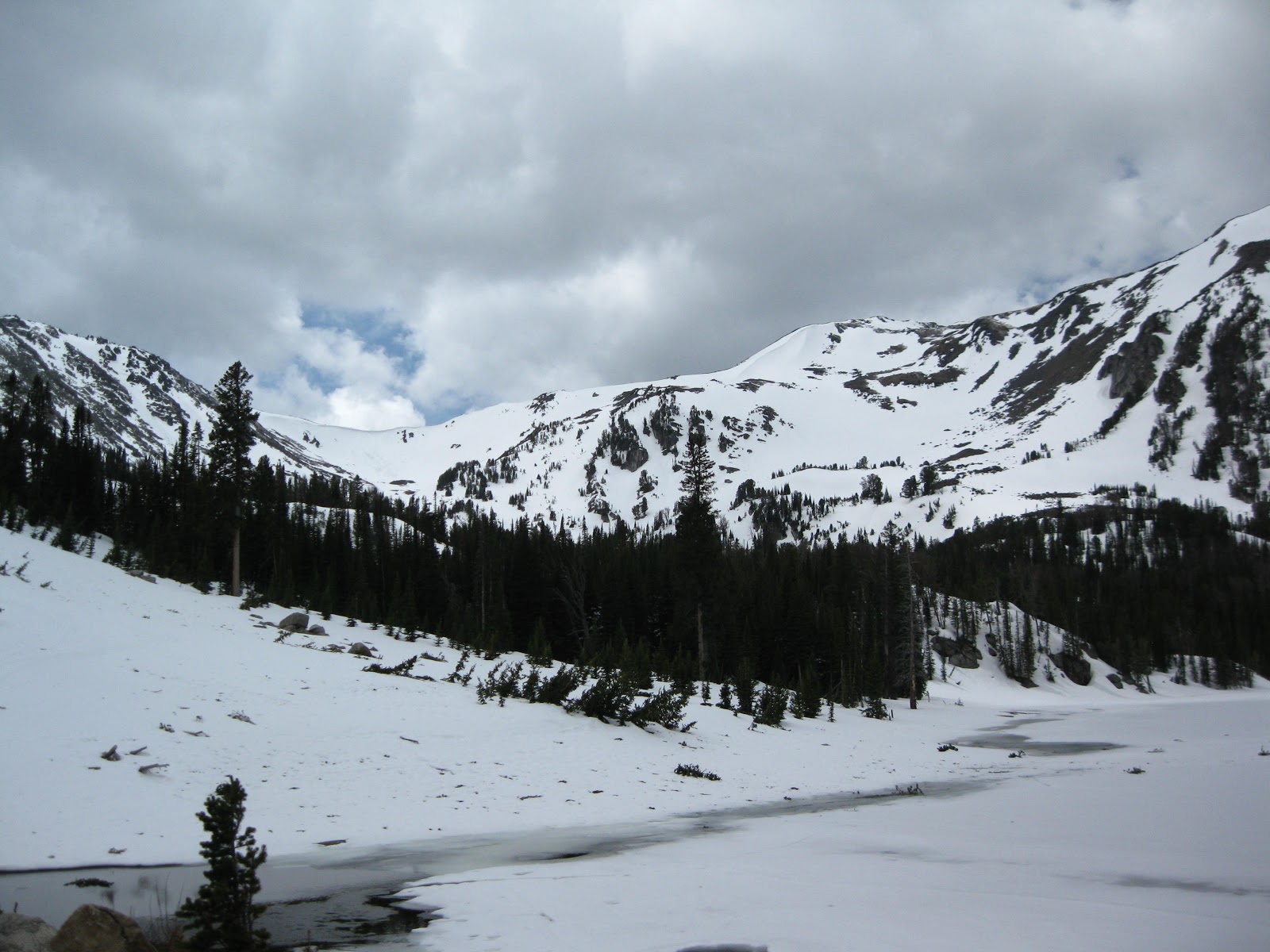
Today Missoula rests under a thick film of smoke. Each morning I rise and I cannot read the sky. Each day I listen to the radio for reports which I don't understand as if I feel like I am marooned on some ashened island. So I have been staring at this photo taken only a week ago along the shores of Lake Michigan while visiting, Leelanau, the land of delight. Everyday since returning to Missoula, I look at this photo--the sky, the water and in some place in my heart I can hear waves on sand and wind warmed by sun. It was in Leelanau where I learned to read the wind, sail on this Great Lake for months and swim in its waters regardless of season. And despite my deep love for this tiny peninsula, I have decided to call Missoula home, for now. This past July I purchased a home, or some land as I like to think of it, in this valleyed city ceilinged by smoke.
This is the longest I have been in one place since my childhood home. In my twenties, I lived in over four countries and had more change of addresses than I care to list. I was in a state of travel and transition. Yet every August except one, which was spent on the island of Sardinia, I have returned to Leelanau. I returned for the light, the warmth of the water, my family and the opportunity to spend time on a tiny spit on land surrounded by a massive lake. To swim in an unsalted sea. To learn how to read the wind. To sail.
And one August, I found myself not wanting to leave. It was late summer in 2002 when I met Dennis Clarke. Dennis wore pink flip flops if he wore any shoes at all. An avid skier, surfer and all things involving wind, water and extreme elements--most of his life pursuits revolved around pushing limits, boundaries and oddly enough rarely did we wear shoes. For example, he either wore flip flops or ski boots mostly, even while roofing, Tevas were the shoe of choice.
To tell you of how I first met Dennis would be a novella in itself, a short story of happenstance and luck, which I would like to think are the main ingredients for most love affairs, but what I want you to know about Dennis is how he breathed. He would take deep calming breaths and quietly exhale and for some reason it made my body feel so warm, so relaxed. As if all the wind he followed, sailed in and rode he could hold and then release through his strong solid frame. Basically, I felt safe.
I first met the midwest Steve McQueen look alike after I had just returned from Rome and had just finished the six year stint of living and teaching abroad. Life had never been so open, so full of possibilities and I had also never been so blonde. I came back from Italy with a strong sense of ease and a real interest in my looks which surprised most people who had known me for my entire life. Vanity had been something for other girls, especially the ones who found themselves with a lot of attention and offers ranging from being pushed on the swings to being asked to multiple proms.
But that summer post-Italy, people asked me, "what happened? Em, you look," long pause in between followed by a look away from my eyes, "you look, so different, so good?" At the time I thought it was just being blond and the all of 98 pounds I weighted thanks to my charming habit of smoking cigarettes instead of dinner. But I thought being gamine was the new game. But really, it was the sense of freedom that gave my frame a glow.
And it was that same glint of light and ease in Dennis, who I had officially met 10 years prior while he still had Jesus in his cheeks at a Polka festival, that I found so attractive. Dennis appeared older and more weathered, more Westernized, American Westernized with a straw cowboy hat, surf trunks and a body only found in the likes of Laird Hamiliton and of course, pink flip flops. And that summer we met, he asked me on a date, to his "place" on Omigisi Trail , a very short dirt road at the very end of Leelanau Peninsula--a few short miles from where this photo was taken.
Now, I may have been out of the country for six years, but I knew exactly where Omigisi Trail was based on high school parties in the summers when we (the local kids) if lucky to be invited to the summer home of some kid whose father owned Firestone tires or Ball Jars--then we got to see how the other summered half lived. Oddly enough Leelanau is old money, if any money at all.
So when Dennis gave me directions, I was confused by this man who lived mostly out of truck and in a wet suit. And the date? Windsurfing and a hot tub at his "home". Ideal, right? Fumbling with his address, I finally located his truck, but could not find a house and while heading toward the beach, I passed what any person or young child would call, a tree fort. I found Dennis stoking a fire under an old metal cherry box filled with water. Smiling, he said, "Welcome to my home, want to take a dip?" Pointing to the metal box. "it might just be warm enough."
And really from there on out, it was a go. As if the winds were up and in the right direction for over four years where in that period of time not a single adventure was unlike the beginning. From sailing around Lake Michigan for weeks with a 12 year old dog and a young cat without GPS and a naive sense of following the stars for directions, we managed to island hop and see parts of our homeland from a new angle. We spent winters in southeastern Colorado and we also cooked a lot together in the confines of a galley kitchen of a boat or in the back of a beat up pick up truck. When I wasn't teaching, we were out exploring. And Dennis, no matter the season, followed the wind.
As long as we were adventuring, we were loving. But coop us up in an apartment, and neither of us were at our best. Neither of us knew how to be settled. And neither of us knew how to keep our relationship stable enough to create a home. And really there is as long of a novella about why we parted as how we fell in love. And in the late summer of 2006, we parted.
To say I have been haunted by this thought of why we couldn't keep love as an adventure is an understatement. To try and put your finger on why something didn't work out between two people is about as simple as trying to understand why you have green or blue eyes. Sure, there's genetics as a guide, but there is also grace and happenstance. The same unknowns which help you fall in love can be the same components of what causes the fall, the winds to just change.
As the winds rise today in Missoula, I don't get excited or think about which direction to move or sail, I think about fire. The fires that hang and haunt so many of us who live here. But before the winds and the fire arrived, I moved into my new house--when the air was clear and I had views of the hills that surround North Missoula. During the first week on Defoe street, I was working an average of nine hours at the cooking school and five hours at home--cleaning, scrubbing, painting and then doing it all over again. One night I was on the floor pulling up tacks from carpet I had pulled and I was getting angry. I had had a great day at work and now I was enjoying Zenning out at home. What was my problem? I went through the rolodex of the day and had no complaints--was I lonely, no. was I tired, sure but not exhausted, was I sad, nope. But I was still annoyed. Finally, I just decided to give my brain and body a break and go to bed. Showered, I climbed into bed and felt my anger was still around as if I could taste it like I can taste the smoke as I write these words.
I tried to just focus on my breath the way Dennis had taught me years ago--to focus even in the midst of raging winds and people yelling to return to breath, your breath as a place of refuge. As I was exhaling, I heard myself gasp and suddenly my body turned warm, turned calm. And heard this sentence fall out of mind, I feel safe. I am safe.
What surfaced was as simple as the change in direction of wind. What surfaced was an awareness of myself alone in my new home. I don't think I am any different from anyone else when I say we have relationships for a lot of obvious reasons, companionship, conversation, sex, humor and adventure, but if we are really honest, we have someone in our intimate lives to feel safe. To feel like our back is watched, our nights are kept guarded by the ears of a dog, the snore of man and the knowledge that we can relax and unwind in the nightlight of someone else's love. But at the end of the day, a long day, I think we realize that safety is an inside job. No one can give it to you, design a well built home, locked truck or well lighted cabin without you feeling it first.
Maybe other people figure this out long ago, maybe other people don't have to travel around the world to finally purchase a home by themselves to understand the gift of giving safety to your self first. Me, I am a slow learner, a sailor and finally someone with an address I can call home, my safe place even in this sea of smoke. I feel safe, I feel placed.
A Draft
I know a man who seduces me with winds,
not words. He takes me for weeks with compass
and charts to follow the flight of cormorants,
the caws of gulls. At night, we wrap
our bodies in damp air. Stars hum.
Listen, he tells me, my mother only
let me raise pigeons. I taught myself to sail
with only bags of wind. I’m a failure
with twenty-twenty vision. I believe him.
I hear grapes in autumn, wait for fawns
to sneeze. In this hut of my heart,
I am certain of the grace of hurricanes.
A breath inhaled today, a gust
tomorrow. Wind takes what cannot stay.
Friday, August 23, 2013
Wednesday, July 10, 2013
Waiting on a Train
From the winter of 1996 to the summer of 2001, I lived in Europe. Two work visas, one student visa and an endless amount of hours waiting, sitting, reading, sleeping, arguing, hiding and even plain ole watching was spent on trains crossing borders and countries. I miss train travel terribly, but feel lucky enough to have the reminder of their passing echo off these hills in Missoula.
When Jaime and I came up with this idea to both post photos and write about waiting on a train, I unearthed some old photographs which I have loosely identified. I truly wish I had photos of all of you who I spent hours with in between all this waiting. Here's a very small collection of a cross section of those six years.
It's dangerous at times, this box of photos. I often think of it as my own personal Pandora. Or in other words, I believe nostalgia is hope's more complicated sister. They both have their dark and light. They both can leave you lost in your own present life. Believe me, I know. Above all, be patient with your waiting.
A sweet man who hails from the town Fish, poetry.
(Ryba, Poland, 1997)
Dark soot in my handkerchief, Krakow will shadow my soul.
(Kielce to Krakow, Poland 1998)
They sound of thunderstorms mostly, trains through meadows or cobblestones.
(Bieszczady, South Eastern Poland, 1997)
Filled with so much youth, no stale taste of loneliness.
(Dirt Road Bus Stop, Spiez, Poland, 1999)
We jumped trains late one night, followed domed springed daffodils.
(Tatra Mountains, Poland 1999)
My brother, French Alps tracks, we skied like a TGV.
(Grenoble, France 2000)
There is beauty in missing a train, an unearthed stone.
(Orange, France, 2000)
We are all salt drying on the sea, smiling back.
(Italy, 2001)
One of my fondest-missed pastimes, waiting with the best.
(Ali Campbell, me, Brad & Ryan Campbell, Italy, 2001)
A new year in deep winter, it all begins somewhere.
(New Years Day, Bratislava, Slovakia, 1996)
Wednesday, June 26, 2013
My Essence was Lost in the Mail
Every day as a child, I waited for my dad by our mailbox. Barefoot in myrtle, squinting as I still do every time I smile, I waited for the sounds of the lone car heading up to the very end of Old Mission Peninsula--some 20 miles due north of Traverse City, Michigan. We lived in a farm house which had previously been occupied by migrant workers who came as far as Southern Mexico to harvest the cherries that surrounded our modest home. Everyday, even in the winter, I would wait by the mailbox for my dad, to sing my name and laugh, "Em-i-leee" as he got out of his Oldsmobile.
When I was in graduate school working on a collection of poems, so many images from the era of my bucolic youth, isolation, cherry blossoms and the scent of woodsmoke on wool scarves surfaced. Plus, I was writing on the shores of Lake Superior after years of living abroad and it felt like I was returning to my youth, all birch beech forest, buffered by a cold deep lake and so much quiet. One night a fellow poet and I were out at a Sports Bar, drunk on cheap pitchered beer and watched other people play pool, when he said, "Your youth is just too poetic pretty, just too....pretty. You really shouldn't write poems about it, it's too cliche Emily."
I wish I could tell you I had some quick reply, some retort along the lines of "not every poet is wounded by Saginaw and loss and just so you know, being sensitive isn't the only prerequisite for writing verse. I can say this because my name IS Emily." But I didn't. I think I tried to say something funny and act like it didn't bother me. But I've carried the comment for years like some shoe box labelled "photographs" of my past I only look at alone.
Ironically, I am drawn to the "uglier" moments in writing--the neglected dogs of Detroit, ice cream stands outside of Auschwitz, dust bowled towns in Eastern Montana where a handwritten sign from some fourth grader scribbled, "say no to meth," men crying at bus stops while you just say sorry in their language, gas stations in Nevada filled with keno machines where people the color of ash sit with so much hope under neon. But when I see these moments, I hear Yeats in my head, "the terrible beauty is born." And wonder what delight can be risked in seeing these scenes not as merely ugly, but terribly beautiful. An irony that gets you closer to some truth.
After that night in the Sports Bar in Ishpeming, I took my fellow writer friend's word to heart and tried for weeks to write of anorexia, men who smelled of bad meat and beat their wives behind the thin walls in Poland, our family Collie being overrun with maggots and the man in a Budapest train station with no arms or legs, placed on a piece of wet worn cardboard with just an empty bowl. I tried for ugly. And sitting in my thesis director's office after reading my attempt to write about my beyond thin roommate eat handfuls of sugar naked in a kitchen, he looked at me and calmly said, "Emily, you have to love something to write about it, you have to find what you love about anorexia to write it well. You must love this world, really love it so much to write poems. Even at its ugliest, it is still love."
And I believe him. I still do even after all these years of my book being short-listed for publication, my fumbling attempts after years of rejection, I believe love is at the root of writing poems. I also believe him because for the past few years I have not written a single poem, not even a haiku. Until recently. It might have more to do with my obsessive interest in reading every web page and blog on divorce, reading late night articles on "starting over in your thirties", "joys of not having a family", "10 reasons why being single is rewarding" and too many articles loosely titled, "finding yourself after grief" written by a woman in L.A. who is a life coach with perfect bleached teeth and realizing the life coach speaks in steps, adages and programs. Speaks in terms of liner reason. I do not. I understand metaphor, stories and color. It has taken me awhile to see the towering collection of non-fiction books next to my bed might have curbed my motivation to write poems. It could also be, I didn't really love anything. In other words, I had lost my essence in the mail.
Divorce isn't just about changing your name, your address and your route home after work--divorce is about divorcing yourself from yourself. In the terms of foundation, divorce is the great demolition of your spirit. Despite it's popularity and frequency, let's face it, people understand the complexities of death more than divorce, we all die and yet some of us can remain married. And given I live in a small town, I was able to develop a new level of empathy for the Scarlet Letter and wear my own cursived lettered D around town. Sure, this might all sound melodramatic, but this is what I know, even the ugliest divorces still have beauty, somewhere. Or as Jack Gilbert said in his seminal poem, A Brief For The Defense
Finding Lubricant After the Divorce
In a drawer you keep old jewelry
given mostly by your mother,
you mistake the tube for silver polish.
The gel paled to faint pink,
labeled, I. D. Moments has no smell,
no sugary musk sticks to the air. Unlike
the geraniums, red-filled confident scents
your apartment with bold color,
the same shade of lipstick
you no longer risk to wear.
You count months born from the divorce
baby you carry, careful not to over-feed
or nurse in public. You hide it like some teen
who lives with an aunt for awhile. Grows fat
and quiet in another town. Returns with just new hair.
Thankfully, there is no essence to loss, no perfume
to linger on an old shirt, sheets and underwear.
When I was in graduate school working on a collection of poems, so many images from the era of my bucolic youth, isolation, cherry blossoms and the scent of woodsmoke on wool scarves surfaced. Plus, I was writing on the shores of Lake Superior after years of living abroad and it felt like I was returning to my youth, all birch beech forest, buffered by a cold deep lake and so much quiet. One night a fellow poet and I were out at a Sports Bar, drunk on cheap pitchered beer and watched other people play pool, when he said, "Your youth is just too poetic pretty, just too....pretty. You really shouldn't write poems about it, it's too cliche Emily."
I wish I could tell you I had some quick reply, some retort along the lines of "not every poet is wounded by Saginaw and loss and just so you know, being sensitive isn't the only prerequisite for writing verse. I can say this because my name IS Emily." But I didn't. I think I tried to say something funny and act like it didn't bother me. But I've carried the comment for years like some shoe box labelled "photographs" of my past I only look at alone.
Ironically, I am drawn to the "uglier" moments in writing--the neglected dogs of Detroit, ice cream stands outside of Auschwitz, dust bowled towns in Eastern Montana where a handwritten sign from some fourth grader scribbled, "say no to meth," men crying at bus stops while you just say sorry in their language, gas stations in Nevada filled with keno machines where people the color of ash sit with so much hope under neon. But when I see these moments, I hear Yeats in my head, "the terrible beauty is born." And wonder what delight can be risked in seeing these scenes not as merely ugly, but terribly beautiful. An irony that gets you closer to some truth.
After that night in the Sports Bar in Ishpeming, I took my fellow writer friend's word to heart and tried for weeks to write of anorexia, men who smelled of bad meat and beat their wives behind the thin walls in Poland, our family Collie being overrun with maggots and the man in a Budapest train station with no arms or legs, placed on a piece of wet worn cardboard with just an empty bowl. I tried for ugly. And sitting in my thesis director's office after reading my attempt to write about my beyond thin roommate eat handfuls of sugar naked in a kitchen, he looked at me and calmly said, "Emily, you have to love something to write about it, you have to find what you love about anorexia to write it well. You must love this world, really love it so much to write poems. Even at its ugliest, it is still love."
And I believe him. I still do even after all these years of my book being short-listed for publication, my fumbling attempts after years of rejection, I believe love is at the root of writing poems. I also believe him because for the past few years I have not written a single poem, not even a haiku. Until recently. It might have more to do with my obsessive interest in reading every web page and blog on divorce, reading late night articles on "starting over in your thirties", "joys of not having a family", "10 reasons why being single is rewarding" and too many articles loosely titled, "finding yourself after grief" written by a woman in L.A. who is a life coach with perfect bleached teeth and realizing the life coach speaks in steps, adages and programs. Speaks in terms of liner reason. I do not. I understand metaphor, stories and color. It has taken me awhile to see the towering collection of non-fiction books next to my bed might have curbed my motivation to write poems. It could also be, I didn't really love anything. In other words, I had lost my essence in the mail.
Divorce isn't just about changing your name, your address and your route home after work--divorce is about divorcing yourself from yourself. In the terms of foundation, divorce is the great demolition of your spirit. Despite it's popularity and frequency, let's face it, people understand the complexities of death more than divorce, we all die and yet some of us can remain married. And given I live in a small town, I was able to develop a new level of empathy for the Scarlet Letter and wear my own cursived lettered D around town. Sure, this might all sound melodramatic, but this is what I know, even the ugliest divorces still have beauty, somewhere. Or as Jack Gilbert said in his seminal poem, A Brief For The Defense
We must risk delight. We can do without pleasure,
but not delight. Not enjoyment. We must have
the stubbornness to accept our gladness in the ruthless
furnace of this world. To make injustice the only
measure of our attention is to praise the Devil.
If the locomotive of the Lord runs us down,
we should give that that the end had magnitude.
We must admit there will be music despite everything.
And like my thesis director, I believe the old poet's words to be true. Most people get to have families and build homes in their lives trajectory of maturation, for those of us lucky enough to get divorced, we get to really learn what it means to risk delight, to loose everything you thought you knew about yourself and figure out what lies beyond. We get to sniff out our essence. Before I go any farther, let me make something clear, I do not, I repeat I do not recommend divorce to anyone as a means to go deeper into yourself. We all know there is no label on a marriage certificate listing the possible affects, side effects and symptoms brought on by divorce. But if you find yourself with a bad case of loss and hopelessness, you have options. You can choose to either stay with others coined the un-evolved in some modern limboed hell complaining how life treated you poorly and how the locomotive actually ran you down. Or, you get to figure out what you really value and want for yourself. Let me also say, option B, is a very long and slow process with a lot less glory, fun and people to hang out with. Option B is usually pretty solitary and lonely.
But thankfully for me, I had a very solitary beginning. Back in the days of waiting for my dad to come home after spending hours in the woods exploring, I didn't know any different. I didn't know other people had playmates and buddies all day. I didn't miss what I didn't ever have. And here lies the crux of divorce, you once had someone to eat dinner with on a Wednesday, you once shared a tent with someone during a snow storm, you once had inside jokes and above all, you once had the belief in love. But when you had something once, thankfully, you will know how to have it again. Or in the terms of food, once you've eaten fresh calamari from the shores of a Greek island, you will remember what fresh calamari tastes like--you can hold the essence of its beauty in your mind and try to recreate it, travel for it, revere it and really know something sublime exists. You can believe there is still love after love. There is still music despite everything. There are still poems.
Speaking of, after all these years, here's a new one.
Finding Lubricant After the Divorce
given mostly by your mother,
you mistake the tube for silver polish.
The gel paled to faint pink,
labeled, I. D. Moments has no smell,
no sugary musk sticks to the air. Unlike
the geraniums, red-filled confident scents
your apartment with bold color,
the same shade of lipstick
you no longer risk to wear.
You count months born from the divorce
baby you carry, careful not to over-feed
or nurse in public. You hide it like some teen
who lives with an aunt for awhile. Grows fat
and quiet in another town. Returns with just new hair.
Thankfully, there is no essence to loss, no perfume
to linger on an old shirt, sheets and underwear.
Wednesday, May 15, 2013
Internal West
Internal West
Most days, you wake to
trains
announce arrival to
valleyed town,
bedded tracks cross and
end
in your ears. You hear the ease
in carrying weight you
cannot
comprehend. The body of
an airplane passes
in pieces, empty thorax
of jet, one lone wing
rides in dry wind on its side. But out here
in hollowed out prairie and dust
bowled side streets, trains call
out and sound
no different in Spain
or Poland. They sound of
thunderstorms,
mostly. But your heart, the locomotive
of loss moves against tracks, is thirsty
for song from some lost accordion, some love
you cannot stop leaving. To make tea
from absence, dandelions and ash.
Thursday, April 4, 2013
Learning to Paint at Thirty-Eight
Betsy Johnson never wanted to teach elementary art. Instead of the glued Cheerio pictures for refrigerators, Mrs. Johnson taught us about negative space, shadowing and perspective in the first grade. I recall one winter day we noticed a film projector plugged in and reels ready. We watched a movie on Japanese aesthetics and the philosophy of transience. In just a 15 minute film the narrator used terms such as asperity, loneliness in nature, Buddhism and phrases such as "wisdom in natural simplicity." We were a quiet class of 12, but I would imagine we cocked our heads a lot in blank confusion while the sorrowful back-ground guitar played slightly out of tune. But we didn't complain, we got to watch a movie. Regardless of the advanced terminology, what we could grasp (because we were still stumbling with how to even hold a paint brush) was another term in Japanese aesthetic, imperfection.
I recall really liking the large art room forever scented with wet clay, tempera on dried paper and bins of chalk pastels. But mostly, I liked the wall of windows poorly blocking the bitter winds off Lake Michigan. Those windows were so valuable in a land where winter lasts more than six months, brings walls of white, and rarely if ever, brings the cold sun. But the day we watched a film on Japanese art, we huddled in a dark corner while the reels projected tea bowls, flower arrangements and gardens of rock, gravel and enlarged goldfish on the grey concrete wall. Thankfully there wasn't a Q and A after the movie, again we were six, we probably would have preferred to watch Harold and the Magic Crayon.
After the movie, Mrs. Johnson brought out a narrow rolled-up piece of paper. Pulling the rolls away like some scroll, she held a painted bouquet and pointed to a flower, misshapen and blurred, "this" pointing with purpose,"this" she said, "this is wabi sabi, see how it isn't as pretty, it looks like a mistake. But it isn't, it makes the others look prettier because it isn't perfect." And it isn't an exaggeration to say those words have stayed within my heart and head ever since, it looks like a mistake. But it isn't. And so has this, "wabi sabi nurtures all that is authentic by acknowledging three simple realities: nothing lasts, nothing is finished, and nothing is perfect."
Okay, let's back up a bit. This scene might seem too idyllic to believe. Too much like a Wes Anderson film where the kids perform their written one act plays including amazing set designs. Sure, as much as I want to see my life as The Royal Tenenbaums, including the soundtrack, it just wasn't. I'll give you another version of this era. Why not give you another view of my learned aesthetics at age six. Let's start with my mother. Perhaps my mother's greatest maxims for raising her daughters were, "There will always be someone better looking, thiner or with a better nose. Get over yourself." Now, given this maxim in the mind of someone with a healthy dose of self-confidence and wit, you see the realism: Work with what you have. Given this same maxim in the mind where all you see are thick glasses, wiry hair and your short and slightly awkward frame despite your panache even in first grade to put together an outfit, you hear those words differently. Those words rest as weights. Those words you hear as someone is and always will be better than you. You just cannot grasp the use of wabi sabi for all the moles on your face.
But thankfully with a few decades under my belt alone in front of a mirror, good therapists, a better sense of humor and years in Italy where women learn to truly work confidence into the genetics they inherit, you learn to hear those words as you think they were intended to mean, accept your imperfections, no one and nothing is perfect. I will be honest, I forget this a lot. Some days I only see a reflection of unintended imperfections. Thank god for Lena Dunham. God, I love her and all her imperfections she so effortlessly exposes.
But back to Mrs. Johnson's hard work at treating us as adults gracing us with all of her exposure to art theory. Despite her films, I never really developed as a visual artist. I have had my stints at attempting. My favorite job in college was showing slides for Art History classes, four years of "audited" art history is a great place to start. But like first grade, it was all theory. One summer after a semester of showing hours of Rothkos on a wall in and out of focus, I thought I would attempt to paint. I spent hours with colored pencils first, then tempera on thick paper before paint on canvas. Once while finishing a "piece" of three colored squares on a large canvas outside, (truth be known, squares were truly all I could really draw), my father honestly and astutely said, "Well," while watching me finish the last corner, "it's a good thing you like to paint what you can." Agreeing with him, I thought I might try collage.
I spent an entire month before heading to teach in Rome in my parent's basement with a razor, aerosol can of glue and a stack of discarded art magazines and old children's dictionaries. For one month straight, I only listened to Radiohead's "Kid A" and made endless amounts of "still life" scenes with torn definitions and phrases. I even made a color wheel of monochromatic shades of each color, postcards to send from Rome, and a Christmas card with a poem on the back. Seriously, I think the card had three squares of color and a Christmas tree. Again, work with what you have. Which is why, I prefer to paint with words. I have a lot of them.
Regardless of my varied personal attempts to be a visual artist, it hasn't truly been my dream. My dream has been to be a poet. And like my other fellow writer friends without books published, we sometimes question our dream. I recently had the fortunate opportunity to spend a wonderful week with a good friend who has been finishing her first book. I am so proud of her. She is also 38 and she too has had the dream of being a writer since, like me, we first put together sentences or stanzas on a page. (Follow her progress and insight at her own blog, http://jaimestathis.wordpress.com)
Jaime has been living in a small cabin with a wood stove outside the mountains of Taos, New Mexico for three cold months. Writing. Writing everyday and finishing her book, so we had a lot to talk about. But after days of talking about our writing, our goals and going for walks into the cold winds under all that sky, all that amazing light the sky in Taos holds, we wanted to head to town. So we decided to head to Santa Fe to see Georgia O'Keeffe's museum. Truth be known, we thought we would just head to the large flowers and find some calming pastel spring. But instead, we found ourselves in a dark corner, just like so many years ago in art class, watching a video on Georgia and her life. While hearing the voice of Gene Hackman give the biography of places and schools Georgia attended, an early painting by her was shown of ill-shaped lighthouses with a thick muted sky. It was all Wisconsin in scene and place, but what I could not stop thinking was: it's so bad. In my head, I said, Georgia O'Keeffe wasn't very good? All I could see were imperfections. Gene Hackman's voice continued and dates were thrown around and Jaime and I kept looking at each other with wide eyes and fingers counting as we did the math, Wait, Georgia was our age when she was getting serious about her art. Wait, we said, she was old. (okay, older when she started to really work at art.)
Walking around the museum, I didn't see the flowers. I saw lighthouses shadowed by large massive petals and stark skies with adobes grounding the scene. Every picture I turned to see was once a lighthouse, once something misshapen and re-worked into something balanced and beautiful. Years of work, years of dedication and years of finding a place in nature that spoke to her gave Georgia her voice in paint. She didn't seem to let the lighthouses of her youth keep her from painting large canvases of poppies. Or to use her own words, "I've been absolutely terrified every moment of my life and I've never let it keep me from doing a single thing that I wanted to do."
And I can tell you this, for the first time, I could really understand those words I heard so long ago in art class on wabi sabi, "nothing lasts, nothing is finished, and nothing is perfect." The imperfection in those lighthouses were so beautiful to me because Georgia didn't stop there. She didn't stop painting because she wasn't very good at first, she kept painting because it was her dream. And sure, the flowers of O'Keefe might seem about as perfect in visual imagery as anything we have had the pleasure to gaze upon outside of nature. But now, I keep thinking of those lighthouses in each flower. Those awkward beacons of light of her schooled still lifes in Chicago when Georgia was practicing to paint what she saw in her head. To get it right. To get close enough to making what she saw in her head real to others. And thankfully for us, what she saw and learned to create was really beautiful.
Interestingly enough, Georgia O'Keefe wasn't really fond of poetry, except Japanese haiku poets. I don't have a lot of haiku to share with you in honor of O'Keefe, but what I do have is a poem about loving imperfections.
Enjoy.
Astro in the Skyline
At first he picked me up in what his wife
left him. My fate to fall for a man who drives
a mini-van. At least he didn't chew
his words, smell of olives and sawdust
like the last guy. He arrived right on time,
but when he tried to unlock the door,
it stuck. He swore it was already funny
when he dove up looking like a carpet cleaner,
tired, but shaven. And sometimes it's that easy,
the awkward sexy moment when a man offers
his gloves in a hail storm, you fall
for him, his ill-fitting sweater, uneasy pause
before speaking, the way one person might see
you like the capital of Nepal, or an island in Japan.
I recall really liking the large art room forever scented with wet clay, tempera on dried paper and bins of chalk pastels. But mostly, I liked the wall of windows poorly blocking the bitter winds off Lake Michigan. Those windows were so valuable in a land where winter lasts more than six months, brings walls of white, and rarely if ever, brings the cold sun. But the day we watched a film on Japanese art, we huddled in a dark corner while the reels projected tea bowls, flower arrangements and gardens of rock, gravel and enlarged goldfish on the grey concrete wall. Thankfully there wasn't a Q and A after the movie, again we were six, we probably would have preferred to watch Harold and the Magic Crayon.
After the movie, Mrs. Johnson brought out a narrow rolled-up piece of paper. Pulling the rolls away like some scroll, she held a painted bouquet and pointed to a flower, misshapen and blurred, "this" pointing with purpose,"this" she said, "this is wabi sabi, see how it isn't as pretty, it looks like a mistake. But it isn't, it makes the others look prettier because it isn't perfect." And it isn't an exaggeration to say those words have stayed within my heart and head ever since, it looks like a mistake. But it isn't. And so has this, "wabi sabi nurtures all that is authentic by acknowledging three simple realities: nothing lasts, nothing is finished, and nothing is perfect."
Okay, let's back up a bit. This scene might seem too idyllic to believe. Too much like a Wes Anderson film where the kids perform their written one act plays including amazing set designs. Sure, as much as I want to see my life as The Royal Tenenbaums, including the soundtrack, it just wasn't. I'll give you another version of this era. Why not give you another view of my learned aesthetics at age six. Let's start with my mother. Perhaps my mother's greatest maxims for raising her daughters were, "There will always be someone better looking, thiner or with a better nose. Get over yourself." Now, given this maxim in the mind of someone with a healthy dose of self-confidence and wit, you see the realism: Work with what you have. Given this same maxim in the mind where all you see are thick glasses, wiry hair and your short and slightly awkward frame despite your panache even in first grade to put together an outfit, you hear those words differently. Those words rest as weights. Those words you hear as someone is and always will be better than you. You just cannot grasp the use of wabi sabi for all the moles on your face.
But thankfully with a few decades under my belt alone in front of a mirror, good therapists, a better sense of humor and years in Italy where women learn to truly work confidence into the genetics they inherit, you learn to hear those words as you think they were intended to mean, accept your imperfections, no one and nothing is perfect. I will be honest, I forget this a lot. Some days I only see a reflection of unintended imperfections. Thank god for Lena Dunham. God, I love her and all her imperfections she so effortlessly exposes.
But back to Mrs. Johnson's hard work at treating us as adults gracing us with all of her exposure to art theory. Despite her films, I never really developed as a visual artist. I have had my stints at attempting. My favorite job in college was showing slides for Art History classes, four years of "audited" art history is a great place to start. But like first grade, it was all theory. One summer after a semester of showing hours of Rothkos on a wall in and out of focus, I thought I would attempt to paint. I spent hours with colored pencils first, then tempera on thick paper before paint on canvas. Once while finishing a "piece" of three colored squares on a large canvas outside, (truth be known, squares were truly all I could really draw), my father honestly and astutely said, "Well," while watching me finish the last corner, "it's a good thing you like to paint what you can." Agreeing with him, I thought I might try collage.
I spent an entire month before heading to teach in Rome in my parent's basement with a razor, aerosol can of glue and a stack of discarded art magazines and old children's dictionaries. For one month straight, I only listened to Radiohead's "Kid A" and made endless amounts of "still life" scenes with torn definitions and phrases. I even made a color wheel of monochromatic shades of each color, postcards to send from Rome, and a Christmas card with a poem on the back. Seriously, I think the card had three squares of color and a Christmas tree. Again, work with what you have. Which is why, I prefer to paint with words. I have a lot of them.
Regardless of my varied personal attempts to be a visual artist, it hasn't truly been my dream. My dream has been to be a poet. And like my other fellow writer friends without books published, we sometimes question our dream. I recently had the fortunate opportunity to spend a wonderful week with a good friend who has been finishing her first book. I am so proud of her. She is also 38 and she too has had the dream of being a writer since, like me, we first put together sentences or stanzas on a page. (Follow her progress and insight at her own blog, http://jaimestathis.wordpress.com)
Jaime has been living in a small cabin with a wood stove outside the mountains of Taos, New Mexico for three cold months. Writing. Writing everyday and finishing her book, so we had a lot to talk about. But after days of talking about our writing, our goals and going for walks into the cold winds under all that sky, all that amazing light the sky in Taos holds, we wanted to head to town. So we decided to head to Santa Fe to see Georgia O'Keeffe's museum. Truth be known, we thought we would just head to the large flowers and find some calming pastel spring. But instead, we found ourselves in a dark corner, just like so many years ago in art class, watching a video on Georgia and her life. While hearing the voice of Gene Hackman give the biography of places and schools Georgia attended, an early painting by her was shown of ill-shaped lighthouses with a thick muted sky. It was all Wisconsin in scene and place, but what I could not stop thinking was: it's so bad. In my head, I said, Georgia O'Keeffe wasn't very good? All I could see were imperfections. Gene Hackman's voice continued and dates were thrown around and Jaime and I kept looking at each other with wide eyes and fingers counting as we did the math, Wait, Georgia was our age when she was getting serious about her art. Wait, we said, she was old. (okay, older when she started to really work at art.)
Walking around the museum, I didn't see the flowers. I saw lighthouses shadowed by large massive petals and stark skies with adobes grounding the scene. Every picture I turned to see was once a lighthouse, once something misshapen and re-worked into something balanced and beautiful. Years of work, years of dedication and years of finding a place in nature that spoke to her gave Georgia her voice in paint. She didn't seem to let the lighthouses of her youth keep her from painting large canvases of poppies. Or to use her own words, "I've been absolutely terrified every moment of my life and I've never let it keep me from doing a single thing that I wanted to do."
And I can tell you this, for the first time, I could really understand those words I heard so long ago in art class on wabi sabi, "nothing lasts, nothing is finished, and nothing is perfect." The imperfection in those lighthouses were so beautiful to me because Georgia didn't stop there. She didn't stop painting because she wasn't very good at first, she kept painting because it was her dream. And sure, the flowers of O'Keefe might seem about as perfect in visual imagery as anything we have had the pleasure to gaze upon outside of nature. But now, I keep thinking of those lighthouses in each flower. Those awkward beacons of light of her schooled still lifes in Chicago when Georgia was practicing to paint what she saw in her head. To get it right. To get close enough to making what she saw in her head real to others. And thankfully for us, what she saw and learned to create was really beautiful.
Interestingly enough, Georgia O'Keefe wasn't really fond of poetry, except Japanese haiku poets. I don't have a lot of haiku to share with you in honor of O'Keefe, but what I do have is a poem about loving imperfections.
Enjoy.
Astro in the Skyline
At first he picked me up in what his wife
left him. My fate to fall for a man who drives
a mini-van. At least he didn't chew
his words, smell of olives and sawdust
like the last guy. He arrived right on time,
but when he tried to unlock the door,
it stuck. He swore it was already funny
when he dove up looking like a carpet cleaner,
tired, but shaven. And sometimes it's that easy,
the awkward sexy moment when a man offers
his gloves in a hail storm, you fall
for him, his ill-fitting sweater, uneasy pause
before speaking, the way one person might see
you like the capital of Nepal, or an island in Japan.
Wednesday, February 27, 2013
The Best Boyfriend I Never Dated
Never underestimate the joy in dating someone who doesn't speak English. Especially if you don't speak their language very well. You rely on gestures, mostly speak in the present tense, intonation becomes musical and when referring to complicated concepts you try to choose definitions as if you were looking up a word in a children's dictionary. You opt for simple, direct and the desire for clarity. As if just to be understood is the goal more than hoping to be thought of as smart and witty. And really isn't this more important in matters of the heart?
I would argue some of the best practice I have had with my own heart has not been with the men I've dated, but boyfriends I never even tried dating. I am lucky that I have had some great male role models. My brother, who once took me to school as his show and tell, placed me on top of a chair and asked me questions in front of his second grade class. My father has been the one person I will call from a locked bathroom from any location, in any existential state. Recently my closest best non-dating boyfriend and I play a game called first text rodeo, where we see who can send hellos to each other the earliest. Every morning. Every morning I am lucky to be reminded that even though I am not married, I still love men.
My first non-dating boyfriend, Art Chiaravalli, hails from a family that comes from the same Italian village as Ovid. Italian heritage with poetic sensibilities with a soul all Motown is a good way to describe Art, who was born in East Lansing, Michigan. But let's get something straight from the beginning: Art and I never kissed. But what we did do was--wrote music for our band called Beige is the Color of Love circa 1995, fed homeless people in our dorm room in bitter Ann Arbor winters, wrote letters to each other when you used stamps, made a series of movies based on our childhood fantasies, crashed fraternity parties by slipping in Beastie Boys and danced to Ill Communication as if we were waltzing. We never once considered we weren't in love. But we never even considered kissing. Seriously, Art was the best boyfriend I never dated.
I am hoping most of you have an Art in your lives--someone you once met at tennis camp, young and awkward, where you a tween spent more time staring at the stronger more athletic types playing soccer between the fence while you and Art volleyed a tennis ball--making each other laugh so hard you had to stop. Too shy at the end of the week to exchange phone numbers or addresses, you escaped the awkward good-bye by running away to your respective mini-vans. Years later, you found yourself in a college poetry class and the kid across from you wearing an East Lansing High School tennis sweatshirt looked slightly familiar. Weeks passed and both of you waiting outside Professor Goldstein's office, when you finally introduced yourself, "Hey, I'm Emily. I think we're in Poetry 210 together?" Suddenly, you both saw who each other really was--no longer short haired gamine in all black and the other no longer small chested, argumentative with constant open book syndrome, but somehow in each of you, the pre-teen surfaced. You were just Art and Emily. For the rest of your college career, you were simply this each other, really young and really in love.
Sure, you might be wondering if I ever searched for Art. The early years post-college I was in Europe and Art was in religion. We wrote letters a bit, but we faded away, time passed and recently, I did look Art up. Thanks to the google I found him, his wife and their six children in middle of Michigan where Art teaches high school English and loves it. When reading about his life and family on his school's website, I felt so proud, so happy. Really, if I were to try to explain this to someone in Swedish, I would gesture with my hands around my heart showing it grew, I would smile broadly while nodding, I would say so happy for good friend. And I would mean it.
Sometimes we want our hearts to be a linear story. No, truth be known, many times I want my heart to be linear as if sadness and heartache could be cashed in for happiness and love when we find it. Our hearts are just some cards we keep shuffling, keep gambling away on hope and luck. But like my boy friend I am currently not dating whose arms are covered in tattoos told me while I was crying in a park late last summer, "Regret....regret Emily?" while rolling up his sleeves to point out an almost nude inked nurse holding a needle in her hand, "this is regret, Emily. This is what regret looks like." Did I tell you who much I adore him?
And really, it's the practice of loving what we cannot have or hold which I feel prepares us for knowing how to finally keep love. The homeless dog you find, but later the owners come to claim, the boy you sit next to on an airplane who tells you about his love of the clarinet, the pilot who gives you a ride through a snowstorm in a rented Buick, the skinny boy in graduate school whose father is a plumber and teaches you more about line breaks than anyone else and who eats plate after plate of enchiladas you made, dropping his fork he puts both palms up to the sky and claims your food from some God. These are the men you lean into. These are also the men you let go because they are not yours to have, not yours to keep. You don't date them. Not because you don't love them, but because you learn about love from them. And you also learn how to let them go. And maybe it is the letting go that allows you to see them, really see them as they are as men in themselves and not in reflection of you.
This poem is the first poem I ever published. I wrote this poem in honor for another boy I never dated, Stevie Flowers. He's in the Art category of awkward turned awe-inspiring. I heard through friends that Stevie is a pilot, has a family and I would imagine be someone who would drive a young girl safely home in a snow storm. So if you have any Arts or Stevies in your lives, give them thanks. Take them to a movie. Bake them cookies. For the ones who send you hellos from the other side of town are as important to your silver lining, as the ones you want to roll over next to day after day. And thankfully, the best boyfriends never dated help you learn how to rewrite your own playbook of a heart when you don't want to even pick up a pen.
Enjoy.
In the Public Garden
Every gym class, Stevie Flowers pissed
his corduroys. He hated dodge ball,
stood in the corner or hid
from the bigger boys who broke
anything or anyone small.
He read Make Way For Ducklings,
sat on his knees with Buddha’s
slow smile. I knew even then
he would be the one who loved me.
I still remember the metallic
taste of the bat that summer
we played softball. He cupped my face
while my nose bled, told me later
he’d tape my glasses.
But later it was others who stood
outside my window, holding
a book of Yeats, fly open
with a half drunk grin.
It’s always a simple request
at first.
In the Boston Commons, I pause
at the ducklings in bronze, still
like the boy who read to me.
Somewhere there’s a man
I’d never think to run from.
Thursday, February 7, 2013
Rivers Cannot Run Frozen
Ice-fishing is in my blood. Sure, I won't claim to be a savant at it and frankly, I am not even sure if one can call it a sport--basically it has a skill set of sitting, staring into a holed-watery darkness and forgetting about wind while exposed to bitter temperatures. And what keeps you there? The simple hope a sleepy pike will surface on your baited-iced metal hook. Regardless if it is a true sport or not, I do know this--ice fishing is not for the faint at heart. And speaking of hearts, ice fishing represents everything I believe about love, a mix of slow-baited calculated luck with the capacity to believe in what you cannot always see.
My father and I would ice fish in mid-February when the ice would turn cerulean blue. We would talk about the ice of December and January as if we knew the temptations of first freezes. Early ice would draw us in, perfectly smooth and begging to be ice-skated on and explored under a fat-full moon shining deep into the bottom of School Lake. Even as a kid, I knew that kind of ice was risky, that kind of quick perfection easily breaks. The sort of love that comes up on you so fast and glossy, you forget about any sense of danger. The kind of love that can leave you on a street in a foreign country, outside a tram with no ticket, so you find yourself walking all the way back, home. Trying to forget the perfect French he spoke.
And even late March and early April ice has risks as well. The kind of ice that has been layered, broken, reformed and then layered again and what remains is only white. A shade of white for so long you have forgotten about the color green. When you live where you can ice fish, you likely live where winter lasts for more than half a year, long enough for one to only faintly remember the taste of a fresh cherry, a summered peach. Late winter ice is different in risks, but still not ideal. Sure, it has had more time to build, or endure but the cracks run deeper. The way love that has been broken for too long cannot hold, bad habits formed into patterns make it so much harder to re-build, the risks so much greater to take. Need I give an example, or how about two words? bitter break-up. Or one, divorce.
And perhaps the worst sort of ice of all is aptly called, winterkill. Winterkill occurs during especially long, harsh winters. Fish will die in late winter, but may not be noticed until a month after the ice leaves the lake because the dead fish are temporarily preserved by the cold water. Fish will actually suffocate from lack of dissolved oxygen and float to the surface under a thin layer of ice. The kind of love that goes deep into your skin, beyond your rational mind and further into your murky kept soul. That kind of love that you surface from months later wondering where you have been and found outstretched in your bed sideways. Mouth open and breathless. You awake in the dark of night wondering what parts of yourself you have compromised, gave up on and maybe even froze? The kind of love some people don't ever really recover from. Love that only leaves loss.
But February ice when winter is still fresh in our cheeks and more light slowly begins and ends our days is the ideal month for ice fishing. A great time for love. For someone like myself who finds herself attracted to men born above the 45th parallel, I need a man who loves winter. Winter is a time to be outside bundled, active in snow and exposed to all that can remind us of being more animal than mind.
Plus, ice fishing is about dressing warm and being practical, no one really has stylish outfits for the "sport", unless you think dressing in a full-bodied Carhartt is sexy. (Personally, my dad always looked like a teddy bear, which is endearing for sure.) You sit on white buckets, use tools that look and sound more Inuit than anything, auger and gaff, and more time is spent waiting and being still than being crafty and calculated. And, you have no idea if the fish are even there. You have to just wait. You have to have enough hope in something that you cannot even see or even know if it will arrive.
So really, aren't those better tips for finding love than dressing yourself up and crafting yourself into someone you're not? Calculating risks and putting yourself to the whims of okcupid.com, POF.com (plenty of fish) for the logarithms of love? (True story, a good friend of mine recently went ice fishing with her boyfriend and came back engaged.) Don't under estimate the romance in the sport.
I must admit, it has been too long since I have been ice-fishing. Perhaps I am too shy to ask anyone to go with me. Maybe I am just out of practice. But this past weekend, I went with two couples skate skiing and while driving up to Seeley Lake, I caught a glimpse of some ice fisherman on an early morning Sunday, already seated by their tip-ups and waiting with faces in the morning sun. Later after skiing, we went to a bar named Trixie's in a town called Ovando. I thought I had fallen in love, with Montana yet again. Late bright sun coming through the bar's windows, fries on a plate, elk on the walls and Merle Haggard on the jukebox. Ms. Pac-man in the corner wasn't even dusty, the whiskey with ginger tasted just cold enough and the overweight dog smiling for scrapes inside leaned into my legs.
It was the kind of place you find close to a frozen lake for ice fishing. A bar that serves good food and appears run down just enough, potentially forgotten and not locatable on anyone's i-phone. Which seems like the best kind of place to think about love. To think about no matter how run down, how much wintering your heart has had or been exposed to, you have to believe in what you cannot see. Believe that bar in the middle of nowhere by a frozen lake full of pike is just where you need to be. Just where you need to be to believe in love, after love.
Enjoy.
My father and I would ice fish in mid-February when the ice would turn cerulean blue. We would talk about the ice of December and January as if we knew the temptations of first freezes. Early ice would draw us in, perfectly smooth and begging to be ice-skated on and explored under a fat-full moon shining deep into the bottom of School Lake. Even as a kid, I knew that kind of ice was risky, that kind of quick perfection easily breaks. The sort of love that comes up on you so fast and glossy, you forget about any sense of danger. The kind of love that can leave you on a street in a foreign country, outside a tram with no ticket, so you find yourself walking all the way back, home. Trying to forget the perfect French he spoke.
And even late March and early April ice has risks as well. The kind of ice that has been layered, broken, reformed and then layered again and what remains is only white. A shade of white for so long you have forgotten about the color green. When you live where you can ice fish, you likely live where winter lasts for more than half a year, long enough for one to only faintly remember the taste of a fresh cherry, a summered peach. Late winter ice is different in risks, but still not ideal. Sure, it has had more time to build, or endure but the cracks run deeper. The way love that has been broken for too long cannot hold, bad habits formed into patterns make it so much harder to re-build, the risks so much greater to take. Need I give an example, or how about two words? bitter break-up. Or one, divorce.
And perhaps the worst sort of ice of all is aptly called, winterkill. Winterkill occurs during especially long, harsh winters. Fish will die in late winter, but may not be noticed until a month after the ice leaves the lake because the dead fish are temporarily preserved by the cold water. Fish will actually suffocate from lack of dissolved oxygen and float to the surface under a thin layer of ice. The kind of love that goes deep into your skin, beyond your rational mind and further into your murky kept soul. That kind of love that you surface from months later wondering where you have been and found outstretched in your bed sideways. Mouth open and breathless. You awake in the dark of night wondering what parts of yourself you have compromised, gave up on and maybe even froze? The kind of love some people don't ever really recover from. Love that only leaves loss.
But February ice when winter is still fresh in our cheeks and more light slowly begins and ends our days is the ideal month for ice fishing. A great time for love. For someone like myself who finds herself attracted to men born above the 45th parallel, I need a man who loves winter. Winter is a time to be outside bundled, active in snow and exposed to all that can remind us of being more animal than mind.
Plus, ice fishing is about dressing warm and being practical, no one really has stylish outfits for the "sport", unless you think dressing in a full-bodied Carhartt is sexy. (Personally, my dad always looked like a teddy bear, which is endearing for sure.) You sit on white buckets, use tools that look and sound more Inuit than anything, auger and gaff, and more time is spent waiting and being still than being crafty and calculated. And, you have no idea if the fish are even there. You have to just wait. You have to have enough hope in something that you cannot even see or even know if it will arrive.
So really, aren't those better tips for finding love than dressing yourself up and crafting yourself into someone you're not? Calculating risks and putting yourself to the whims of okcupid.com, POF.com (plenty of fish) for the logarithms of love? (True story, a good friend of mine recently went ice fishing with her boyfriend and came back engaged.) Don't under estimate the romance in the sport.
I must admit, it has been too long since I have been ice-fishing. Perhaps I am too shy to ask anyone to go with me. Maybe I am just out of practice. But this past weekend, I went with two couples skate skiing and while driving up to Seeley Lake, I caught a glimpse of some ice fisherman on an early morning Sunday, already seated by their tip-ups and waiting with faces in the morning sun. Later after skiing, we went to a bar named Trixie's in a town called Ovando. I thought I had fallen in love, with Montana yet again. Late bright sun coming through the bar's windows, fries on a plate, elk on the walls and Merle Haggard on the jukebox. Ms. Pac-man in the corner wasn't even dusty, the whiskey with ginger tasted just cold enough and the overweight dog smiling for scrapes inside leaned into my legs.
It was the kind of place you find close to a frozen lake for ice fishing. A bar that serves good food and appears run down just enough, potentially forgotten and not locatable on anyone's i-phone. Which seems like the best kind of place to think about love. To think about no matter how run down, how much wintering your heart has had or been exposed to, you have to believe in what you cannot see. Believe that bar in the middle of nowhere by a frozen lake full of pike is just where you need to be. Just where you need to be to believe in love, after love.
Enjoy.
Tits and Fish
I envy the leaves, anything
that dies
with the shade of
vermillion on its skin.
The color of shorts you
swim in
every summer at Pelican
lake, the lake
rusting rocks and lichen.
You scramble up
granite, naked enough, your
toes clutched
to the edge before you
release and fall, a half flap
in your weightlessness. The
weight I used to feel
on me as we lay on my wood
floor,
our lips hooked in the
early hours of a day
we never wished to rise.
Our bodies, flat
and floatless under water,
nestled like large mouth
bass in tire shade and weed
bed. We’d sleep
out the heat, hide until
caddis hatch circled
and surfaced, to mate and
leave, full enough
of each other to die. You
wait for these flies
at dusk to know where the
bronzeback
will bite in the early
morning, alone in your metal boated
Minnesota, the state I see
as holed
from an airplane. Minnesota
is just a word
that sinks in my mouth and
sits stale like alewive
belly up in a bucket. I
remember you forgot
to put the minnows in water
and the father yelled “tits
up” at breakfast.
But each dawn, I am under
you
in water, my mouth wide and
hiding
in shade. I am the
stillness in morning
you search for, diving,
without breathing.
Subscribe to:
Posts (Atom)